An Ownership Certificate is a formal document used to recognize or record that a person, organization, or business has ownership of a particular property, asset, item, or interest. A well-designed certificate can provide a professional way to document ownership information and present it in a clear, organized format.
Creating an ownership certificate from scratch can take time, especially when you want the finished document to look professional. An Ownership Certificate Template provides a ready-made layout that you can customize with the owner’s name, property or asset details, date, certificate number, signatures, and other relevant information.
For businesses, organizations, clubs, associations, and individuals, an editable template can make it easier to create consistent and attractive ownership certificates without designing every document from the beginning.
Ownership Certificate Templates:
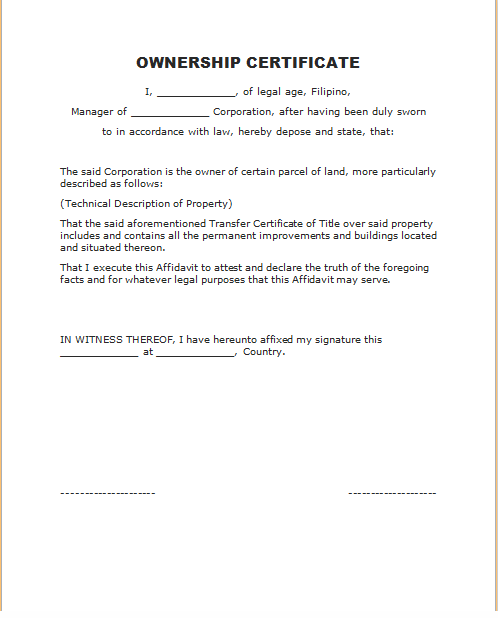

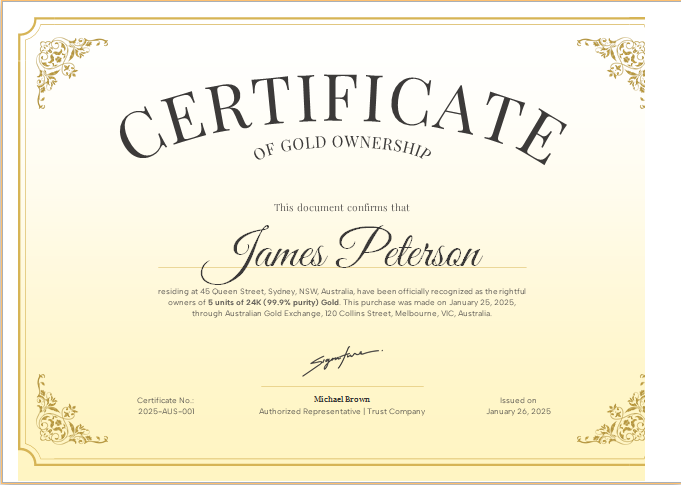
Editable Certificate Of Ownership Template:
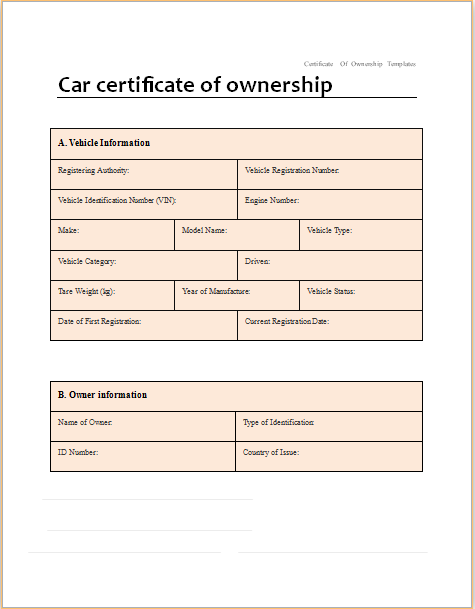
Printable Template Of Certificate Of Ownership:
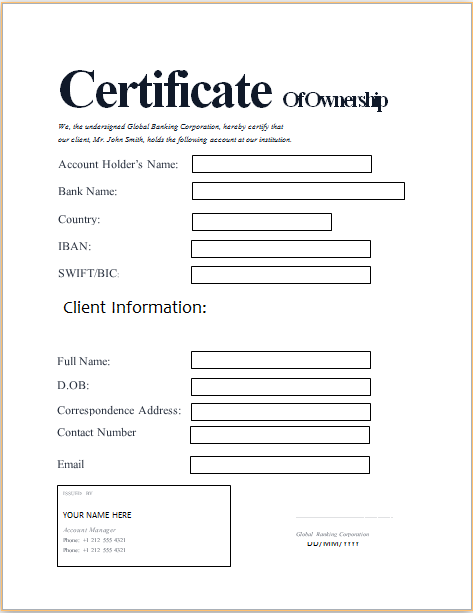
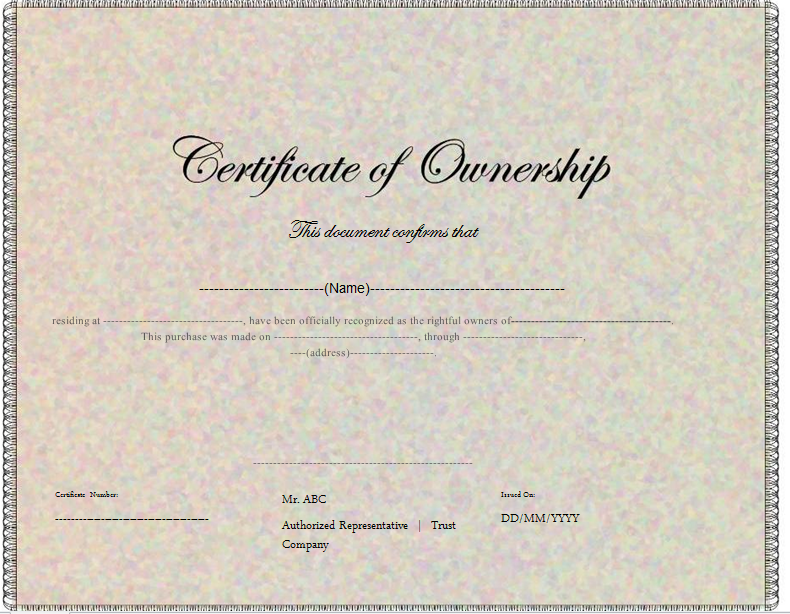
Certificate Of Ownership Sample:
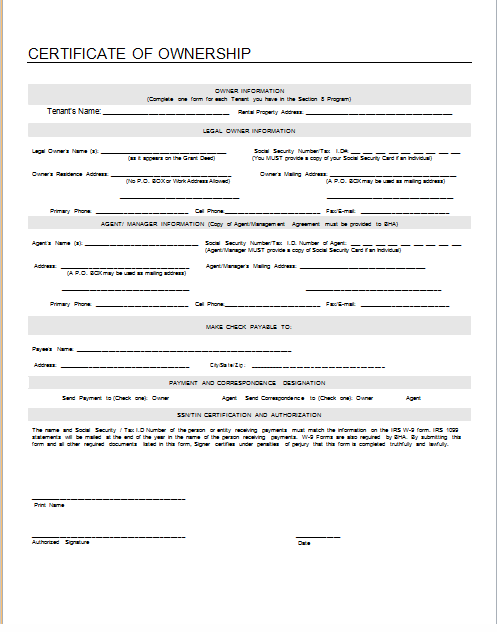
What Is an Ownership Certificate?
An ownership certificate is a document that states or recognizes that a particular person or entity has ownership of something specified in the certificate.
The exact purpose of an ownership certificate can vary depending on what is being owned. It may be used for an asset, property, membership interest, shares, equipment, collectibles, or other items where documenting ownership is useful.
A typical certificate may include:
- Certificate title
- Owner’s full name or organization name
- Description of the property or asset
- Ownership or identification number
- Date of ownership
- Certificate number
- Relevant terms or statements
- Authorized signature
- Issuing organization’s name
- Official seal or stamp
- Date of issue
The information included should be appropriate for the particular purpose of the certificate.
How to Make an Ownership Certificate Look Professional
A certificate should be easy to read while maintaining a formal appearance.
Choose Appropriate Fonts
Traditional serif fonts can give certificates a classic appearance, while clean modern fonts can create a contemporary style. Avoid using too many different fonts.
Use a Clear Hierarchy
The certificate title should stand out from the supporting information. The owner’s name can also receive visual emphasis because it is usually one of the most important pieces of information.
Add a Border
A simple decorative border can help distinguish the certificate from an ordinary document. Choose a border that complements the purpose of the certificate without overwhelming the information.
Include Branding
Businesses and organizations may want to add a logo, organization name, or brand colors to create a consistent appearance.
Leave Space for Signatures
Make sure the signature area is large enough to accommodate handwritten signatures if the certificate will be printed.

