A behavior contract is a simple written agreement that clearly explains an expected behavior, how progress will be measured, and what reinforcement or consequences may follow. Behavior contracts can help children, students, families, teachers, and professionals work toward specific behavioral goals in a consistent and positive way.
Whether you are a parent trying to establish routines at home, a teacher supporting a student in the classroom, or a therapist developing a behavior-support strategy, a well-designed behavior contract can make expectations easier to understand and follow.
In this guide, we’ll explain what behavior contracts are, how they work, what to include, provide practical examples, and discuss how to create one that is realistic and effective.
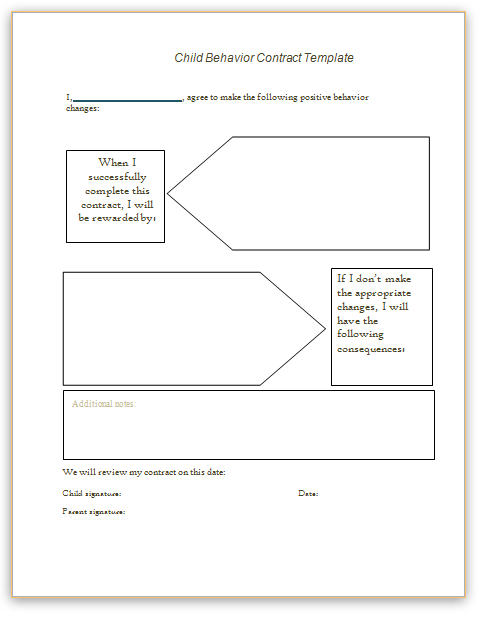
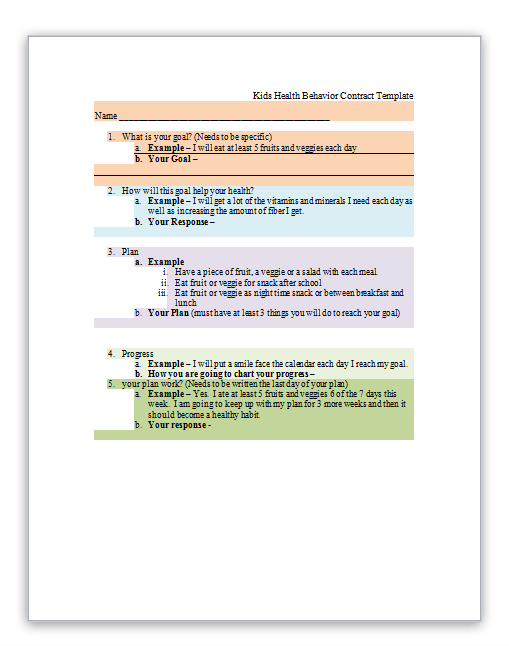
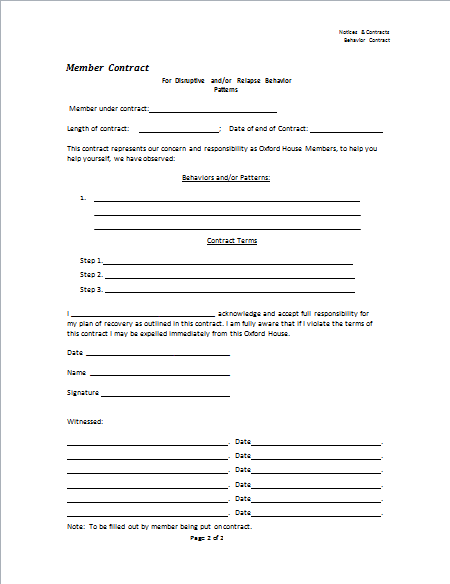
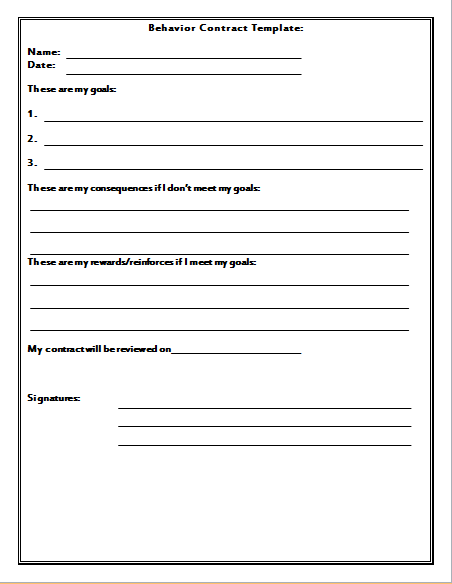
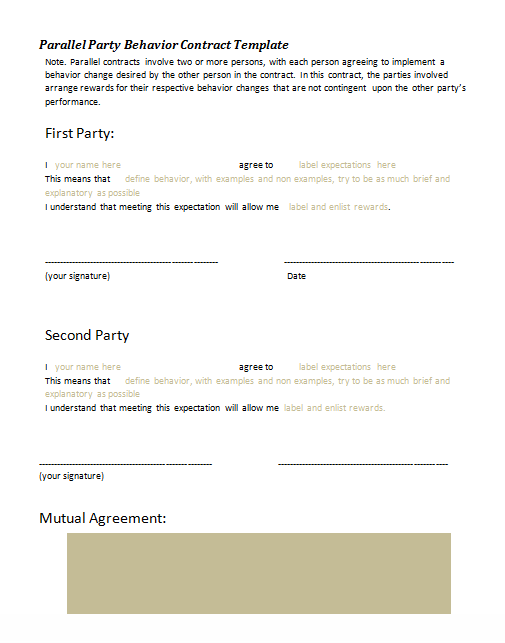
Child Behavior Contract Template:

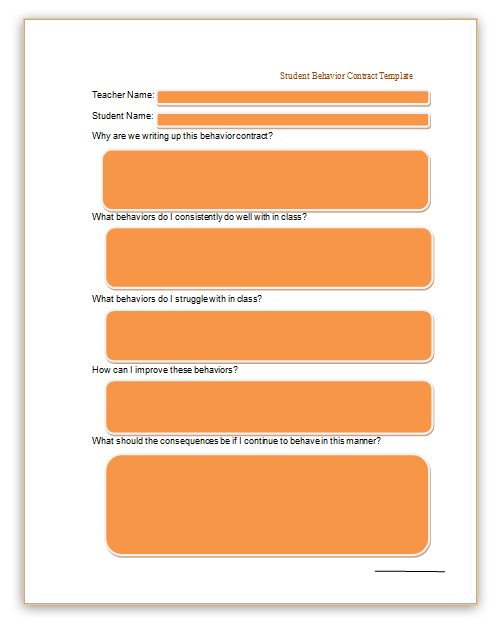
Student Behavior Contract Template:
What Is a Behavior Contract?
A behavior contract is a written agreement between two or more people that identifies a specific behavior goal and the steps needed to achieve it.
The agreement typically identifies:
-
The behavior that is expected
-
When and where the behavior should occur
-
How the behavior will be measured
-
What reinforcement will be provided
-
What happens if the goal is not met
-
Who is responsible for monitoring progress
-
When the agreement will be reviewed
The purpose is not simply to tell someone what they are doing wrong. Instead, a behavior contract creates a clear structure so everyone understands the same expectations.
For example, instead of saying, “Be responsible with your homework,” a contract could state:
“The student will write down homework assignments before leaving class and complete assigned homework by 7:00 p.m. on school nights.”
The second statement is more specific, observable, and measurable.
How Do Behavior Contracts Work?
Behavior contracts are generally based on a straightforward process.
1. Identify the target behavior
Start with one behavior that needs improvement.
Examples include:
-
Completing homework
-
Arriving at school on time
-
Following classroom instructions
-
Using respectful language
-
Staying seated during independent work
-
Completing household responsibilities
-
Following a morning routine
-
Using an appropriate communication strategy
Avoid trying to change many behaviors at once. A focused contract is usually easier to understand and monitor.
2. Define the behavior clearly
The behavior should be observable and measurable.
Instead of:
“The student will behave better.”
Use:
“The student will remain in their assigned seat during independent work for 15 minutes.”
A good question to ask is:
Could another person observe the behavior and agree about whether it happened?
If the answer is yes, the behavior is probably specific enough.
3. Establish a realistic goal
The goal should be challenging but achievable.
If a child currently completes two homework assignments per week, immediately requiring perfect completion every day may be unrealistic.
A better starting goal might be:
“Complete homework on three school nights this week.”
Once the behavior becomes more consistent, the goal can be adjusted.
4. Decide how progress will be measured
Measurement helps everyone determine whether the contract is working.
Depending on the goal, you might track:
-
Number of successful days
-
Number of completed tasks
-
Duration of a behavior
-
Frequency of a behavior
-
Percentage of opportunities
-
Daily points or tokens
-
Weekly progress
For example:
| Day | Homework Completed | Points |
|---|---|---|
| Monday | Yes | 1 |
| Tuesday | Yes | 1 |
| Wednesday | No | 0 |
| Thursday | Yes | 1 |
| Friday | Yes | 1 |
This creates a simple record that can be reviewed together.
What Should a Behavior Contract Include?
A useful behavior contract doesn’t need to be complicated.
1. The participant’s name
Identify who the contract applies to.
2. Target behavior
Describe exactly what the person is expected to do.
3. Setting or circumstances
Explain when or where the behavior applies.
4. Measurement system
Describe how progress will be tracked.
5. Reinforcement
Specify what happens when the goal is achieved.
6. Responsibilities
Explain what each person agrees to do.
7. Review date
Set a time to evaluate whether the contract is working.
8. Signatures
Participants can sign the agreement to demonstrate that everyone understands it.
Remember that a signature should represent understanding and participation rather than pressure.